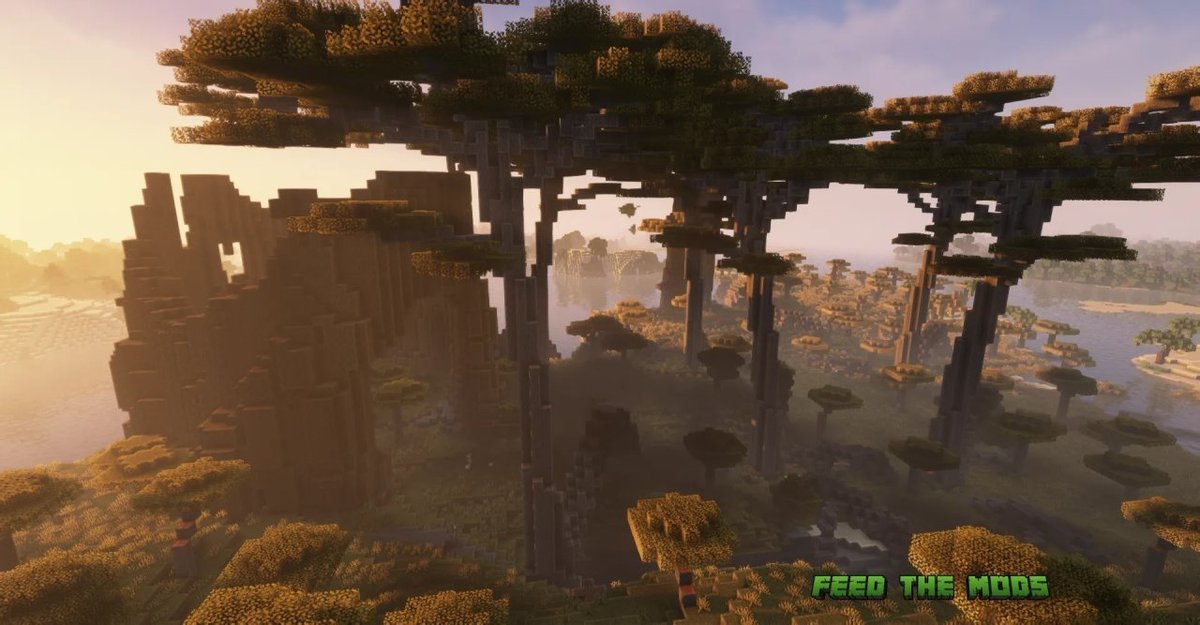
The thrill of uncovering a truly unique world in Minecraft is unmatched. That moment you crest a hill and see a landscape unlike any you've encountered before – towering spires, a glowing mushroom forest, or a vast ocean stretching to the horizon – that's the magic. But vanilla Minecraft, for all its charm, eventually feels familiar. That's where world generation mods come in, offering endless possibilities. But how do you pick the right one from a sea of options? Understanding the Key Features to Look for in World Gen Mods is crucial to transforming your game from good to genuinely epic.
At a Glance: What Makes a Great World Gen Mod?
- Diverse Biomes & Terrain: Expect more than just new trees; look for unique geological formations, varied climates, and distinct ecological zones.
- Structure Overhauls: Fresh dungeons, villages, and points of interest that reward exploration and challenge.
- New Dimensions to Explore: Mods that expand beyond the Overworld, Nether, and End, offering entirely new progression paths.
- Robust Performance & Compatibility: Crucial for a smooth experience, especially in larger modpacks.
- Meaningful Customization: The ability to tweak settings to fine-tune your ideal world.
- Active Development & Community: Assurance of ongoing support, bug fixes, and future content.
Redefining Your Horizon: The Power of World Generation
Vanilla Minecraft worlds are beautiful, but after hundreds or thousands of hours, they can start to feel a little…samey. World generation mods are designed to shatter that monotony, injecting fresh life into your game every time you start a new seed. They aren't just about adding new blocks; they fundamentally alter the algorithms that construct your world, from the height of mountains to the placement of rivers and the density of forests.
Think of it this way: vanilla world generation is a master chef following a classic recipe. World generation mods are innovative chefs, rewriting the cookbook entirely, adding exotic ingredients, and inventing new culinary techniques. The result? A feast for your eyes and an endless banquet of adventure. When you're searching for that next transformative mod, here's what truly matters.
1. Beyond Vanilla Horizons: Biome & Terrain Diversity
This is often the first thing players look for, and for good reason. A world generation mod's primary appeal lies in its ability to generate breathtaking, varied landscapes that inspire awe and exploration. But "more biomes" isn't always "better biomes."
What to Look For:
- Quantity AND Quality: A mod like Terralith offers 95 new biomes, but crucially, it revamps vanilla ones too, ensuring a cohesive and high-quality experience. Similarly, "Oh the Biomes You'll Go" adds 80 biomes, ranging from realistic forests to magical realms, with a strong focus on thoughtful design. It's not just about the numbers; it's about how well-designed and distinct each biome feels.
- Unique Geological Features: Does the mod introduce dramatic cliff faces, floating islands, deep canyons, or intricate cave systems? Larion, for instance, focuses on creating "epic fantasy" style, otherworldly, and dreamlike vistas by overhauling terrain shape and cave generation. This goes beyond just different trees and grass; it changes the very structure of the land.
- Environmental Cohesion: Do the biomes flow naturally into each other, or do you get jarring transitions? A good mod will create a sense of environmental logic, even if the biomes themselves are fantastical. Look for mods that consider how biomes interact.
- Resource Distribution & Progression: How do new biomes affect resource availability? Do they introduce new wood types, unique ore veins, or distinct challenges that tie into a progression system? This adds an extra layer of engagement beyond just visual appeal.
- Vanilla-Friendly Enhancements: Some mods, like Geophilic, aim to enhance vanilla biomes without fundamentally changing their identity. They might increase the commonality of features like grass and flowers, making existing biomes feel more overgrown and natural, which is perfect if you love vanilla but want a little more vibrancy.
2. Structures Reimagined: More Than Just Villages
What good is a beautiful world if there's nothing interesting to discover within it? World generation extends beyond terrain; it includes the structures that populate your world. These points of interest are crucial for giving players goals, challenges, and rewards.
What to Look For:
- Overhauled Vanilla Structures: Mods like YUNG's Mods are masters at this, completely reimagining every vanilla structure. Think more complex dungeons, grander desert temples, or more defensible pillager outposts. This makes revisiting familiar structures exciting again.
- New, Unique Structures: Does the mod add entirely new points of interest, such as custom dungeons, unique villages, ancient ruins, or mystical temples? These can introduce new loot, mobs, and lore.
- Purposeful Placement: Are structures placed logically within biomes? Do they tell a story? For example, a hidden shrine in a magical forest feels more organic than a random dungeon in a desert.
- Varied Challenges & Rewards: Do structures offer a range of difficulty, from simple farmsteads to complex, dangerous fortresses with unique bosses and valuable treasures?
- Creative Reimagining: Repurposed Structures takes a unique approach by allowing vanilla structures to spawn in the shape and style of others. Imagine a pillager outpost designed like a village, or a village that looks like a huge End city. This refreshing take keeps familiar sights new.
3. Venturing into New Dimensions: Expanding Beyond the Overworld
While new biomes and structures in the Overworld are fantastic, some mods take world generation to an entirely different level by introducing new dimensions. This opens up entirely new chapters of gameplay and progression.
What to Look For:
- Distinct New Dimensions: Look for dimensions that offer truly unique environments, mobs, blocks, and mechanics. The Aether, a classic mod, adds a whimsical sky dimension with unique creatures, ores, and dungeons, effectively making glowstone portals functional.
- New Progression Paths: Do these dimensions offer new tiers of tools, armor, or magic? Does progression through them lead to new boss fights or game-changing abilities? BetterEnd revamps the End dimension with dozens of new biomes, mobs, blocks, and even new mechanics like infusion tables, creating a full new progression system for the late game.
- Interconnectedness: How do these dimensions integrate with the main game? Are there resources or challenges in one that are essential for progress in another?
- Massive Scale Exploration: Infinite Dimensions, based on a 2020 April Fools update, offers over two billion procedurally generated dimensions accessible by throwing written books into Nether portals. If boundless, uncharted exploration is your goal, this kind of mod pushes the limits.
- Space Exploration: For an entirely different take on dimensions, Ad Astra adds new planets to explore, requiring players to build rockets, manage oxygen, and construct space stations. This isn't just a new biome; it's a completely new type of gameplay experience rooted in dimensional travel.
4. The Unsung Hero: Performance and Stability
A mod might promise a fantastical new world, but if it turns your game into a slideshow or constantly crashes, it's not worth the effort. Performance and stability are non-negotiable, especially when dealing with complex world generation algorithms.
What to Look For:
- Optimization: Does the mod prioritize efficient code? Some complex generation processes can be very CPU-intensive. Look for mods that are known for being well-optimized, even with their grand scale.
- Memory Footprint: While more complex worlds will naturally use more RAM, a good mod won't be excessively bloated. Check for community feedback on memory usage.
- Frame Rate Impact: A world generation mod will almost always impact FPS to some degree, especially during chunk loading. However, a well-designed mod will minimize this impact, ensuring smooth gameplay once chunks are generated.
- Bug Reports & Fixes: An active development team that addresses bugs quickly is a good sign. Check the mod's project page for bug reports and update frequency.
5. Seamless Integration: Compatibility is Key
Minecraft modding often involves building a larger modpack, and nothing is more frustrating than having two amazing mods conflict with each other. A good world generation mod considers its place in the larger ecosystem.
What to Look For:
- Biome Overlap Management: If you're running multiple biome-adding mods, how do they interact? Some world gen mods are designed to be compatible with others. Larion, for example, intentionally leaves actual biomes and their features unchanged, ensuring compatibility with other biome-altering mods or even vanilla biomes.
- Structure Integration: Do structures from other mods spawn correctly in the new biomes? Does the world gen mod break existing structure generation from other mods you might be using?
- Modpack Friendliness: Is the mod commonly included in popular modpacks? This often indicates good general compatibility and stability. Cobblemon, for example, is an open-source Pokemon mod explicitly designed for compatibility and suitable for multiplayer modpacks, making it an excellent addition to worlds generated by other mods.
- Configuration Options for Conflicts: Does the mod offer configuration options to disable certain features or adjust generation to resolve potential conflicts with other mods?
- Active Developer Communication: Developers who openly discuss compatibility concerns and provide guidance for integrating their mod into larger packs are invaluable.
6. Your World, Your Rules: Customization & Control
While some players love to be surprised, others prefer to fine-tune their world generation to specific tastes or for particular playstyles. The level of customization a mod offers can significantly enhance its long-term appeal.
What to Look For:
- Biome Frequency & Size: Can you adjust how often certain biomes appear or how large they are? Want a world dominated by deserts or a mosaic of tiny biomes?
- Terrain Generation Sliders: The ability to tweak parameters like mountain height, ocean depth, or cave density can dramatically alter the feel of your world without needing a new mod.
- Structure Density & Type: Can you increase or decrease the frequency of dungeons, villages, or specific custom structures? Maybe you want a structure-dense world for exploration or a sparse one for building.
- Ore Generation Control: Some mods allow you to adjust how ores spawn within new biomes, which can be crucial for balancing progression, especially if new ores are introduced.
- JSON/Datapack Integration: Advanced users might look for mods that expose their generation parameters via JSON files or datapacks, allowing for even deeper customization without recompiling the mod.
7. The Long Haul: Updates, Support, and Community
A mod is a living piece of software. Its longevity and reliability depend heavily on its ongoing development and the community around it.
What to Look For:
- Active Development: Is the mod frequently updated to new Minecraft versions and does it receive regular bug fixes and content additions? An abandoned mod, no matter how good, will eventually become unplayable with newer game versions.
- Clear Development Roadmap: Some developers share their plans for future updates, giving you an idea of what's to come. Larion, for example, clearly states that its mod is in active development and future updates will likely change world generation and potentially cause weird chunk borders if updated on existing worlds – crucial information for players.
- Community Engagement: A vibrant community on Discord, GitHub, or modding forums can provide troubleshooting help, share configurations, and even suggest improvements to the developers.
- Documentation: Good documentation, whether on a wiki or mod page, explains how the mod works, its features, and how to configure it.
Common Questions About World Gen Mods
Q: Will installing a world gen mod affect existing worlds?
A: Generally, no. World gen mods only affect newly generated chunks. If you load an existing world with a world gen mod, only chunks you explore for the first time will be generated using the mod's rules. This can lead to "chunk borders" where old vanilla generation abruptly meets new modded generation, which some players dislike visually.
Q: How do I find the best world gen mods for my playstyle?
A: Start by considering what you want most: more biomes, new dimensions, overhauled structures, or a mix. Then, search mod repositories like CurseForge, filtering by "World Gen" or similar categories. Read descriptions, watch showcase videos, and check out reviews. We've even compiled a list of some of the best world generation mods to get you started!
Q: Do world gen mods impact server performance more than client performance?
A: Yes, significantly. World generation is largely a server-side process, as the server is responsible for creating and storing the world data. Complex world gen mods can put a heavy load on a server's CPU and RAM, especially when many players are exploring new chunks simultaneously. Always test world gen mods on your server setup before deploying them to a public audience.
Q: Can I run multiple world gen mods at once?
A: It depends. Some are designed for compatibility (like Larion with other biome mods), while others might conflict heavily. Mixing mods that add entirely new biome sets (e.g., Terralith and Oh the Biomes You'll Go) often results in unpredictable or even broken generation. It's usually safer to pick one primary world gen mod and supplement it with structure-focused mods or dimension-adding mods that operate independently. Always check mod descriptions for compatibility notes.
Charting Your Course: Making the Right Choice
Choosing the right world generation mod isn't just about finding the one with the most features; it's about finding the one that aligns with your vision for exploration, adventure, and performance. Do you yearn for vast, alien dimensions, or simply want to breathe new life into vanilla biomes? Are you building a solo experience where performance can be optimized for one player, or a bustling multiplayer server that needs robust stability?
By focusing on biome diversity, structure quality, dimensional expansion, and the often-overlooked aspects of performance, compatibility, and customization, you can confidently navigate the vast ocean of world generation mods. Take your time, experiment, and prepare to embark on truly unforgettable journeys. The perfect world is waiting for you to discover it.